
The Governor's Budget Has a Blind Spot — and Transit Riders Will Pay for It
California's transit agencies are finally climbing out of the hole created by COVID-19, with ridership recovering across the state. That recovery is fragile. And the Governor's May Revision budget makes no mention of a looming funding crisis that could shatter it.
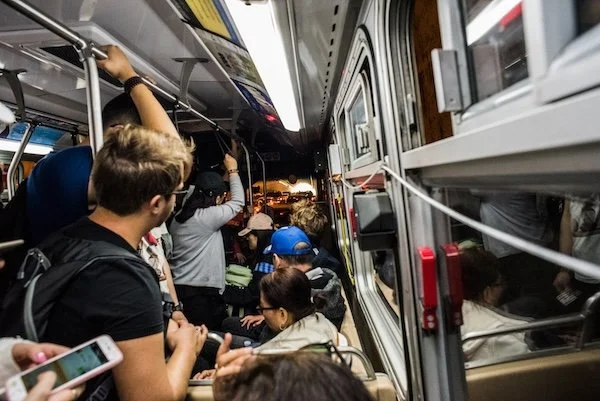
Lose the bus service you depend on today in the hopes that oil companies will cut gas prices tomorrow? Seems like a bad deal.
If the California Air Resources Board approves proposed regulatory changes to the state's Cap-and-Invest program on May 28, up to $1.4 billion in annual transit funding could disappear, leaving a major budget shortfall for future legislatures and the next Governor to solve, or forcing service cuts to transit systems across the state.
What's at Stake
The Legislative Analyst's Office projects that CARB's proposed changes would cut Cap-and-Invest revenues by roughly $2 billion per year, leaving no funding for three programs that California's transit agencies depend on, including:
$400 million for the Transit and Intercity Rail Capital Program (TIRCP)
$200 million for the Low Carbon Transit Operations Program (LCTOP)
$800 million for the Affordable Housing and Sustainable Communities Program (AHSC)
These cuts won’t just impact future projects – they will also impact funding streams that agencies use today to run buses, finish construction projects, and house people near transit.
LCTOP, TIRCP, and AHSC are continuous appropriations, renewed each year without specific budget authorizations. Just last year, the Legislature voted to extend Cap & Invest and these continuous appropriations based on an assumption that $4 billion was likely to be generated every year for the foreseeable future. Agencies, authorized by the Legislature, have made multi-year commitments with this funding like signing contracts, hiring staff, and breaking ground on projects in confidence that the money would keep coming.
CARB’s proposal would increase the number of free pollution allowances given to refineries, reducing the amount of revenue generated through the Cap-and-Invest program for CA Climate Investments, meaning that there is not enough money to flow through to these priorities. CARB, an executive agency, would be effectively overriding the Legislatures’ stated priorities without a budget vote. If that happens, projects already under construction could lose the funding needed to finish, and transit agencies running services today won't have funding to continue.
What these programs fund:
LCTOP funds ongoing transit operations – the things riders experience every day. Recent awards include $48.7 million for operations of Metro's A Line light rail in Los Angeles. These aren't one-time grants, and transit agencies have built their operating budgets around them.
TIRCP funds large capital projects that take years to build, and projects often break ground before the money is in hand. Recent awards include funding for the OC Streetcar to add new rail miles. Mid-stream cuts don't just pause projects, they also risk the federal matching funds those projects depend on.
AHSC ties affordable housing and transit together in the same investment — funding the bike lanes, bus stops, and pedestrian connections that make it possible to live in affordable housing and avoid the expense of owning a car. Under CARB's proposed regulations, this program gets zeroed out entirely.
We're Having the Wrong Conversation About Affordability
CARB's proposed changes are being made under the banner of affordability. But they will almost certainly make transportation less affordable for the Californians who have the least.
For most California households, transportation is the second-largest expense, costing more than twice what families spend on healthcare. People who rely on transit are overwhelmingly lower-income, elderly, and/or face disabilities that make driving impossible. Cutting bus service to make gas cheaper will not make transportation more affordable for them.
The mechanism behind the proposed changes is a "Manufacturing Decarbonization Incentive" which are free allowances handed to refineries in exchange for voluntary facility upgrades that would lower that facility’s carbon emissions, on the theory that this will keep refineries in California and lower gas prices. But the LAO has flagged that under this proposal, some emitters could receive free allowances well in excess of their actual emissions, which creates a windfall with no accountability for results.
This isn't a new idea to give incentives to fossil fuel companies in the hopes that they will pass savings on to consumers. There is slim historical evidence to suggest that it will work to lower gas prices for Californians, and plenty of evidence to suggest that it won’t, including recent comments from the CEO of Western States Petroleum Association. The deal being offered to transit-dependent Californians is this: lose the bus service you depend on today, in exchange for the very unlikely very unlikely possibility that oil companies might lower gas prices tomorrow.
Transit Investment Would ACTUALLY Help Affordability
If the goal is to help Californians afford transportation, there are faster and more direct ways to do it than giveaways to the oil industry. According to the American Public Transportation Association, households that replace a car with a transit pass can cut annual transportation costs from $12,000 to as low as $1,200.
LCTOP has been delivering on exactly this: funding San Francisco's Free Muni program and low-income fare subsidies across the state. These investments don't require anyone to own a car, finance a car, insure a car, or wait years for a refinery to make a voluntary upgrade. They offer relief right now for Californians who need it most.
For Californians who don't have access to reliable transit, the answer isn't to abandon investment; it's to make transit better and faster. Two low-cost solutions can make a real difference in the near term:
Bus-only lanes require little more than paint and enforcement, can be completed in months to a couple of years, and reduce travel times by up to 25%. When buses get faster and more reliable, more people ride them. Dedicated bus lanes in San Francisco have increased ridership anywhere from 25% to 145% depending on the line. The funding to do more of this exists through GGRF — if it isn't cut.
Tap-to-pay fare systems replace old ticketing infrastructure and speed up boarding, cut agency administrative costs, and make it easier for riders to access discounts they're entitled to, without paperwork or a trip to a transit center. California's own Cal-ITP program has been rolling this out statewide. In the Bay Area, free and reduced-fare transfers are projected to save multi-agency riders up to $1,500 per year and increase ridership by 30,000 trips per day.
These projects won’t take a decade to roll out. They are policy choices that can be made now, with funding that already exists, unless CARB's proposed regulations eliminate it.
What We're Asking
We’re also asking the CARB board to reject these proposed regulatory changes at their meeting on May 28th.
And, the Legislature and Governor Newsom cannot pretend that this funding issue does not exist. We’re asking the Legislature to acknowledge the impact of CARB's proposed regulations on transit funding and transportation affordability and go on the record in opposition to the proposed adjustments. If CARB moves forward with proposed changes, the Legislature and Governor must identify a replacement for these funds in next year’s budget.
California's transit agencies survived COVID. They shouldn't have to survive another shock caused by a regulatory choice.